
Hualapai Workforce Assessment Report
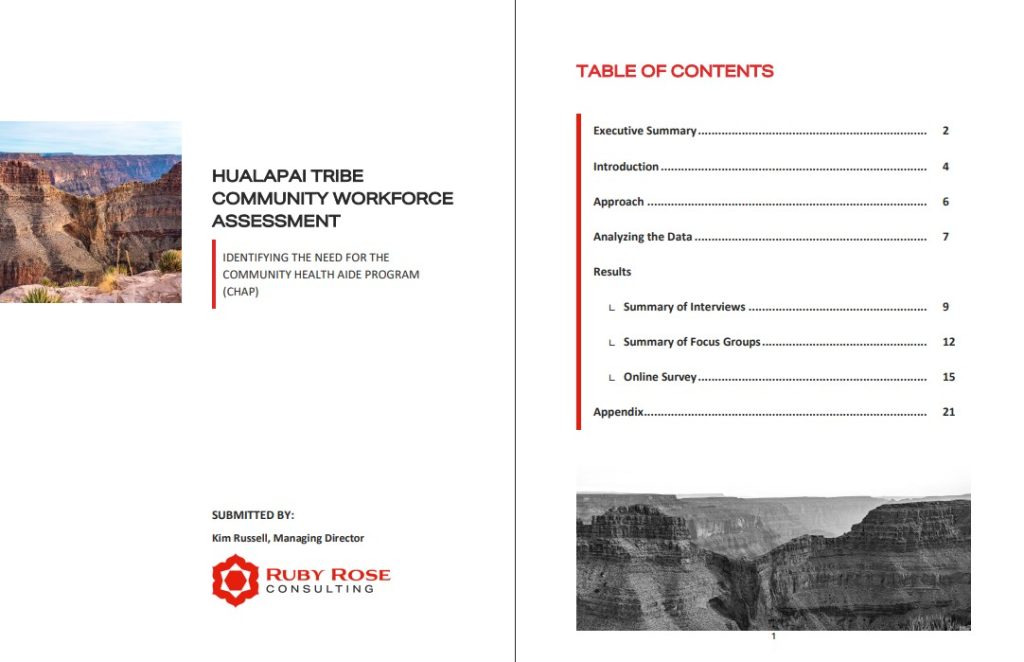
Hualapai Community Health Aide Program (CHAP) Community Assessment
Project Overview
The Hualapai Community-Based Assessment was conducted to gather input from community members regarding local health care needs, priorities, and services, and to evaluate the potential need for a Community Health Aide Program (CHAP). Information was collected through focus groups, interviews, and an online survey.
Community members expressed strong support for a tribally driven and tribally informed health workforce program that would train local residents to provide health care services within the community. Participants viewed CHAP as an innovative approach to improving access to primary care, behavioral health, and dental health services while strengthening local capacity and trust in the health care system.
Key Findings
Barriers to Health Care Access
The assessment identified several significant barriers to obtaining health care services:
- High turnover among health care providers has led to disruptions in continuity of care and reduced access to services, particularly in dental care.
- Transportation challenges make it difficult for many residents to attend medical, behavioral health, and dental appointments.
- Limited transportation options for referrals outside the reservation often prevent community members from receiving needed care.
Priority Populations and Services
Community members highlighted several areas of urgent need:
- Elder care services, including care coordination, health system navigation, and wound care support related to diabetes.
- Behavioral health services for youth, with concerns raised about suicidal ideation, suicide attempts, and the frequency of suicide-related incidents within the community.
- Increased access to local health professionals who understand the community’s culture, values, and needs.
When asked about program priorities, participants identified the following CHAP workforce roles as most important:
- Community Health Aides
- Behavioral Health Aides
- Dental Health Aides/Therapists
Benefits of the CHAP Model
Participants identified numerous potential benefits of implementing CHAP, including:
- Bringing health care services directly into the community, particularly for elders and individuals with transportation limitations.
- Faster response to health concerns and emergencies through locally based providers.
- Expanded availability of services during evenings and weekends.
- Reduced need for patients to travel off-reservation for certain health care services.
- Increased trust and continuity of care through community-based providers.
Recommendations for Implementation
Community members emphasized several factors that would be critical to the success of CHAP:
- Strong support from Tribal Council, including dedicated funding and facilities.
- Financial and educational support for students, including scholarships, stipends, transportation assistance, and childcare services.
- Clear pathways to employment upon completion of training.
- Collaboration with existing community programs and departments, including Education, Childcare, After-School Programs, and Health Services.
- Strategic integration of CHAP into existing community infrastructure to promote long-term sustainability.
- Development of external partnerships with educational institutions and government agencies, including Mohave Community College and state and county programs.
Looking Forward
The assessment demonstrates strong community interest in developing a Hualapai Community Health Aide Program. Community members see CHAP as an opportunity to improve access to care, strengthen local health services, and empower tribal members to play a direct role in improving the health and well-being of the Hualapai Nation.